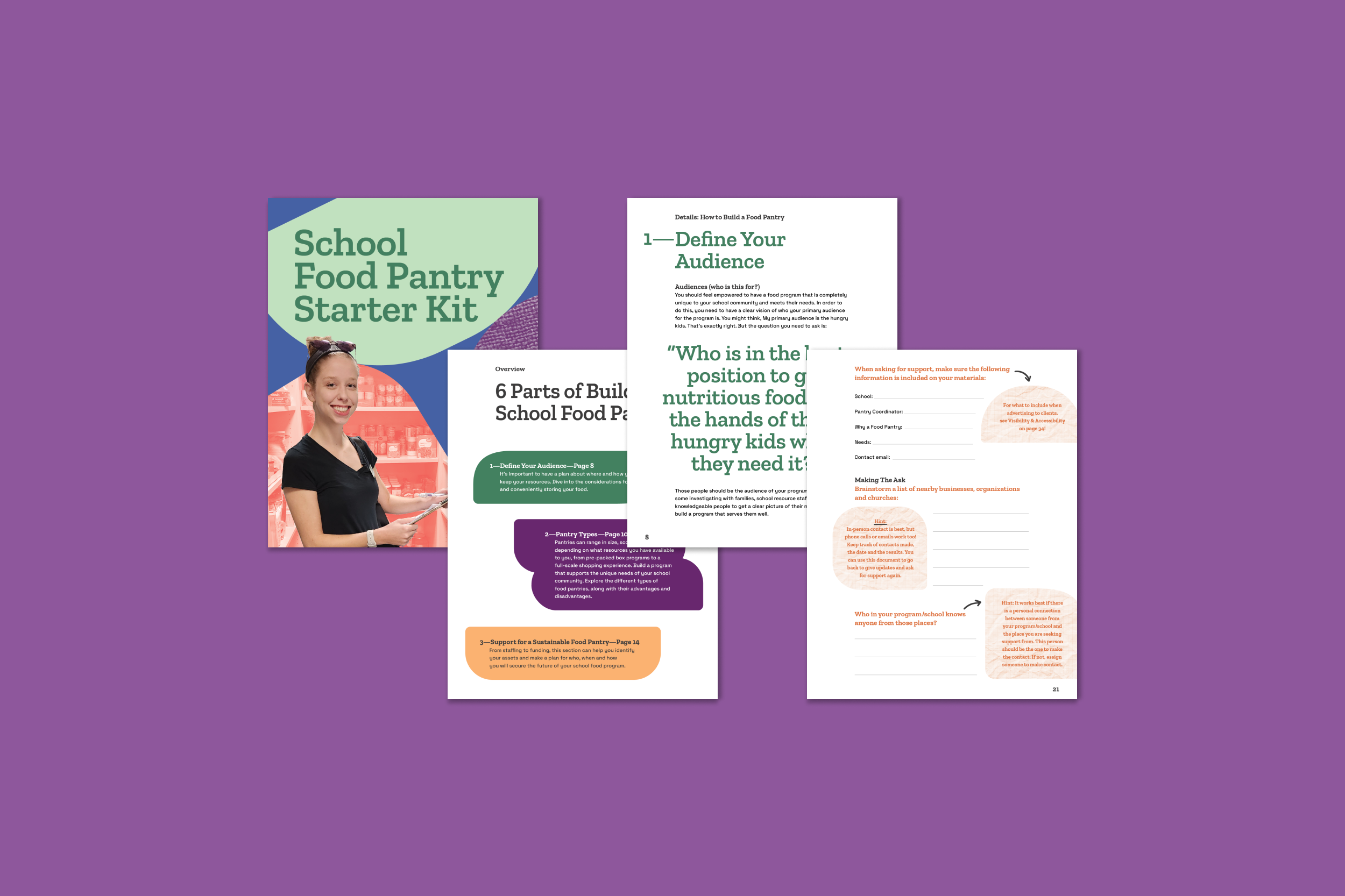


School Food Pantry Starter Kit (2025): A coalition of food-security nonprofits wanted to create a toolkit to support schools launching and sustaining food pantries. Shaping the overwhelming amount of information spread between stakeholders in multiple orgs into a clear guide for non-experts had led past efforts to stall out.
With a design strategist, I co-led the content architecture, restructuring the client’s draft into a clear content system. I also built a decision framework that let a non-design group choose a visual direction with confidence, and designed and produced the final printed workbook.
Client: A coalition of food-security focused orgs in Eugene, OR
Role: Content Architecture, Visual Design, Production
Team: Design Strategist (lead), Nonprofit Coalition Stakeholders
Design Strategy: Laying a Foundation
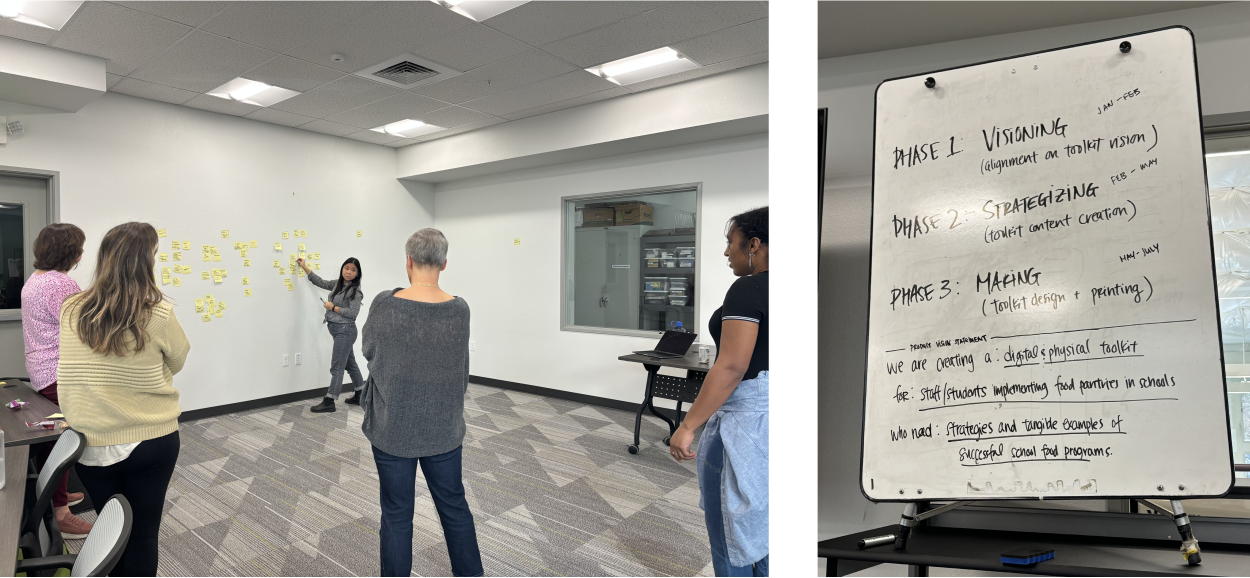
I supported the design strategist in facilitating an initial workshop that aligned stakeholders, defined the toolkit’s purpose, and built consensus on structure and priorities.
At the end of the workshop the design strategist worked with the stakeholders to create a product vision statement:
“We are creating a toolkit for staff and students implementing food pantries in schools who need strategies and tangible examples of successful school food programs.”
This statement became the anchor for content organization and visual design decisions.
Content Development & Peer Feedback
The strategist turned the workshop decisions into a content outline, and the client team wrote a full draft. Peer reviewers in schools and partner organizations then refined it, adding fundraising ideas and accessibility guidance for non-native English speakers, before it came to me for design.
Content Architecture
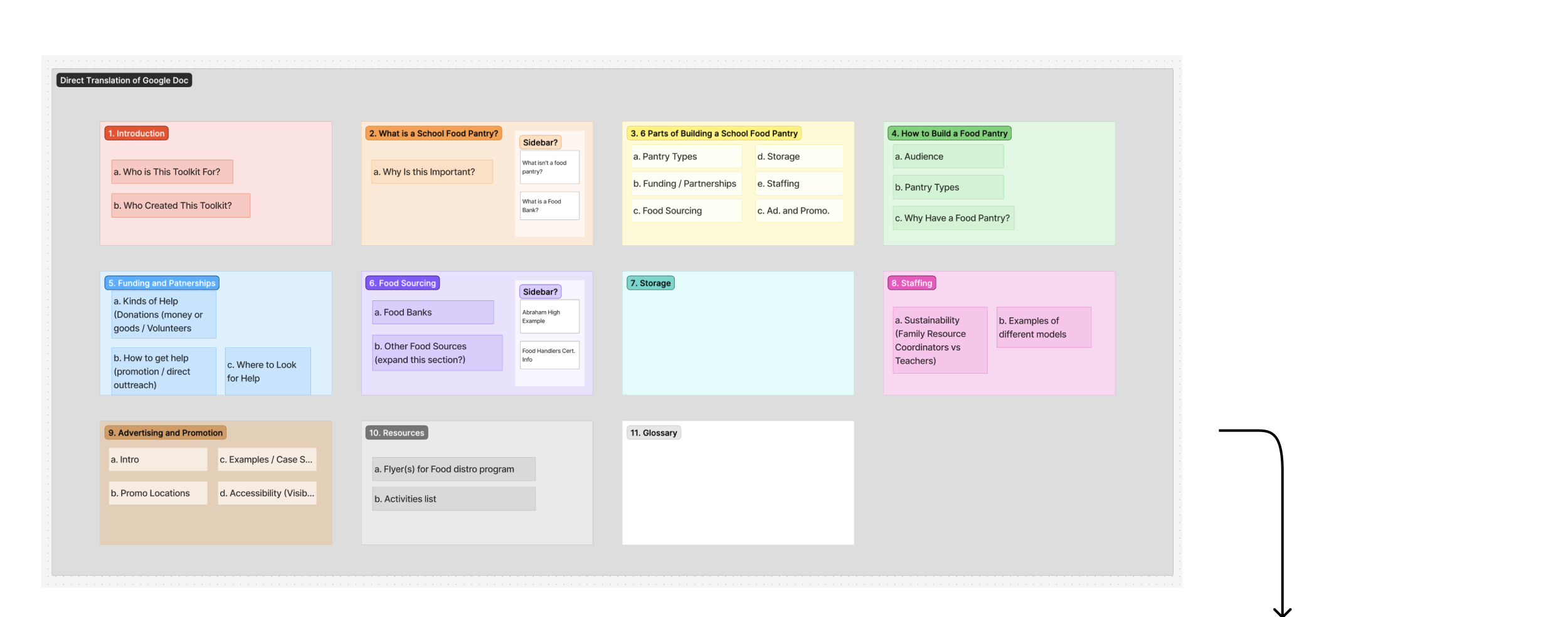
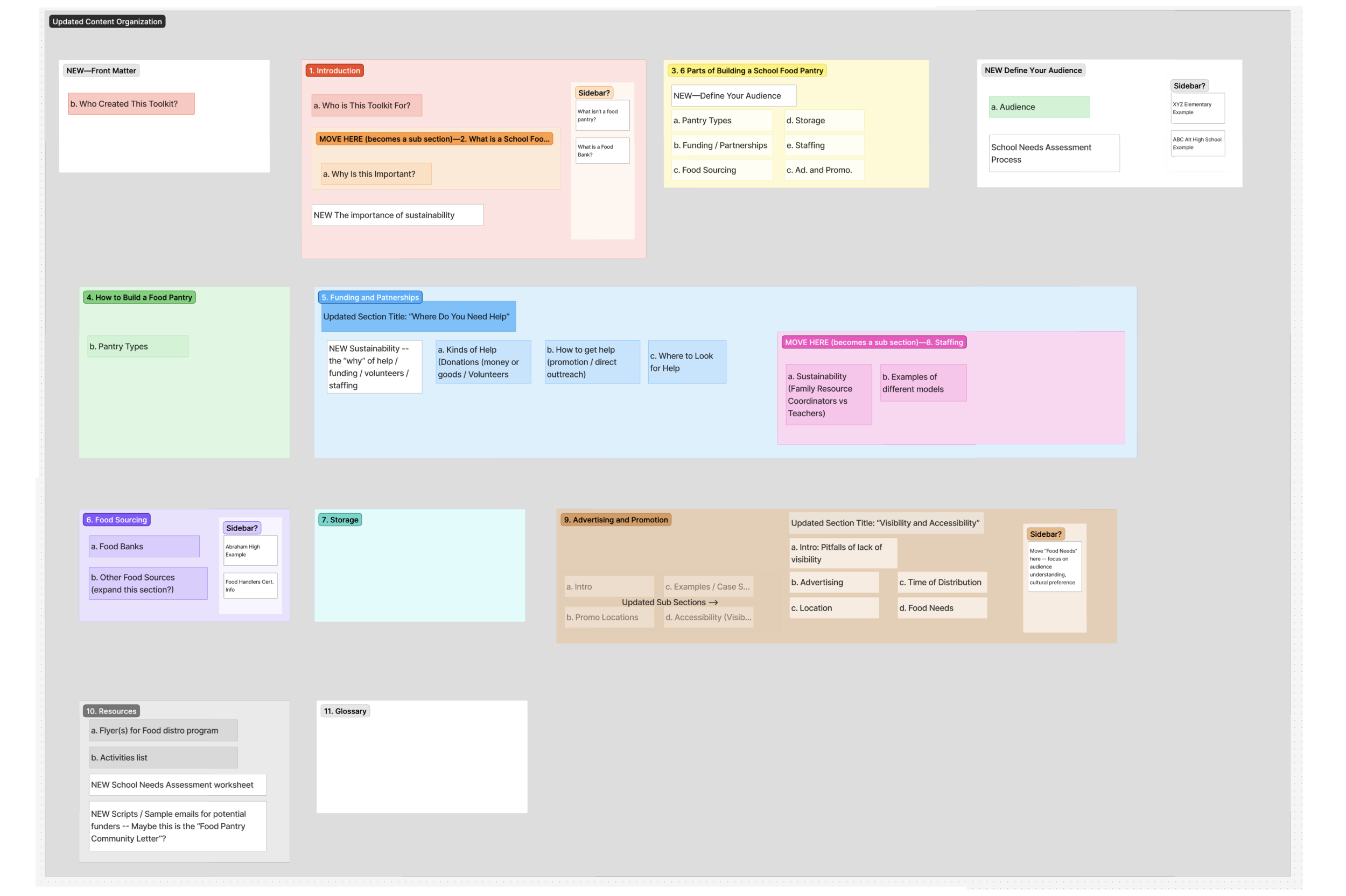
With the draft content completed we entered the design phase of the project. I approached the content as a system: diagramming the flow, mapping relationships between sections, and spotting redundancies and gaps. Based on this map, I proposed structural refinements — re-grouping sections, moving supporting material into sidebars, and introducing new modules where context was missing. For each change, I provided suggested titles and example content to guide the client. The resulting content framework was both clearer and more actionable as we moved into visual design.
Building a Visual Language
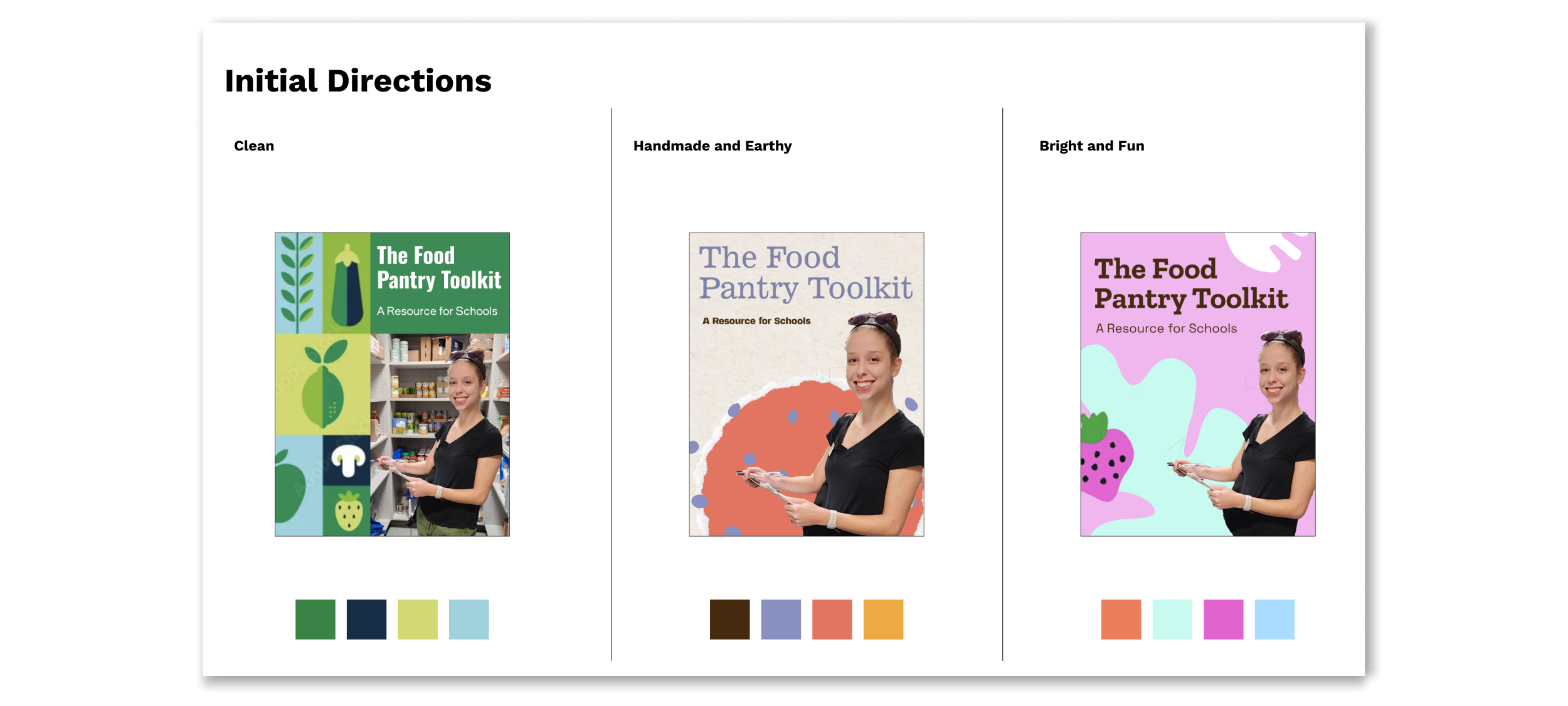
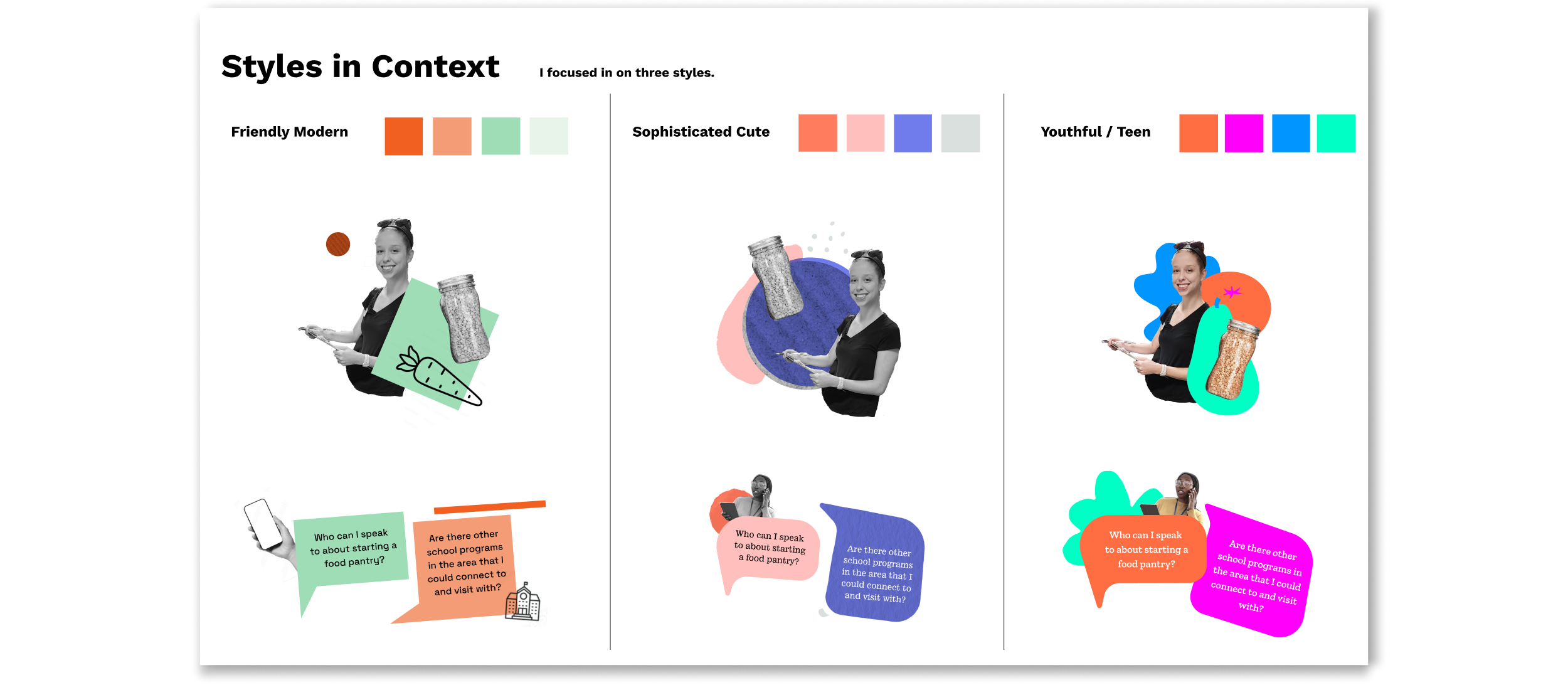
Budgetary constraints limited the final product to a booklet style publication. After a review of similar toolkit projects, I produced an initial set of design directions, using a mock cover design as a way to broadly express typographic and illustrative choices.
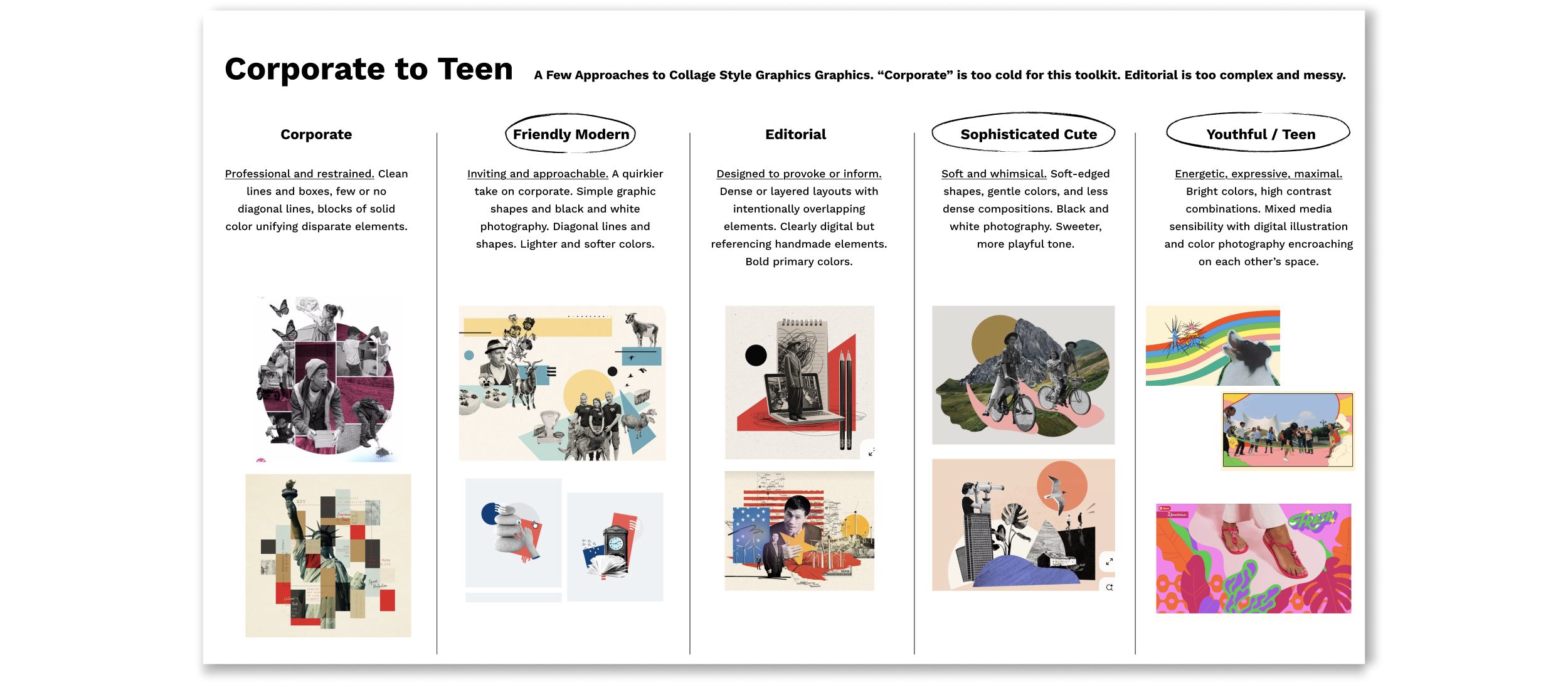
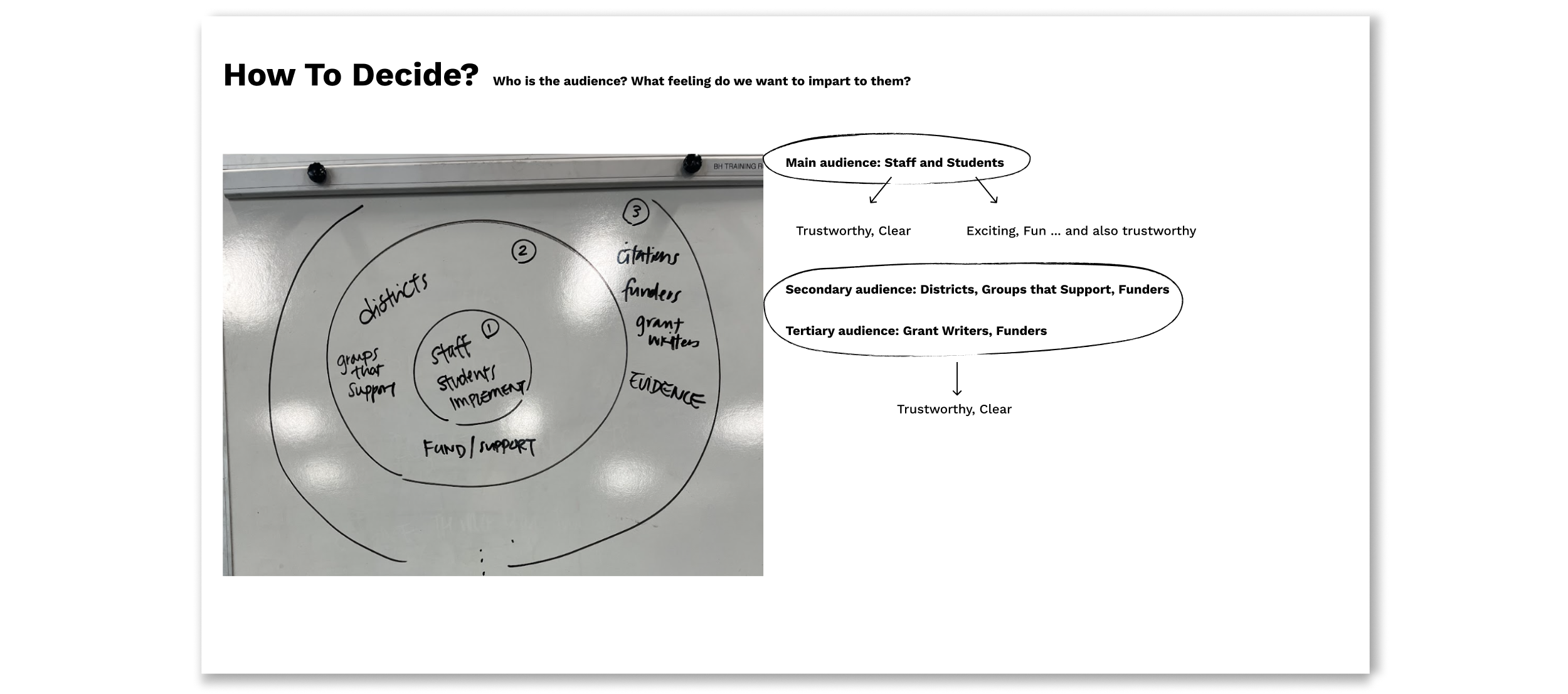
In presenting these directions I realized that the clients were unsure of how to make decisions regarding design. I took a step back and produced a deck giving them a framework to think about the choices in. I focused on collage inspired directions which would allow us to work with images of varying quality successfully. I tied the visual research in the deck back to our findings in the initial workshop.
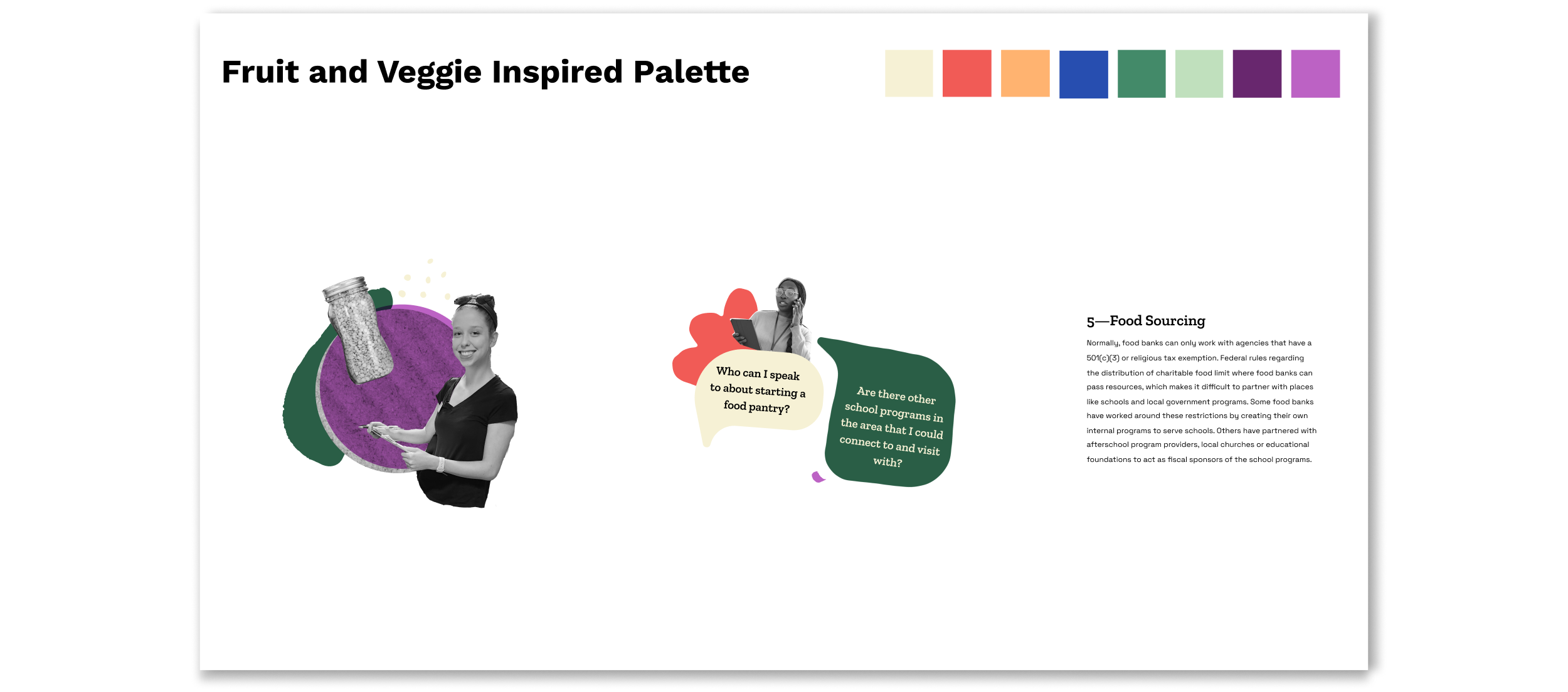
Armed with an understanding of how visual choices supported engagement with different audiences, the School Food Coalition decided on a sophisticated collage based direction that would appeal to both adult and teen stakeholders. After a few rounds of revision we landed on a food inspired palette.
Once we had locked in on a visual language I was able to develop a system of elements to streamline the toolkit, including section openers, sidebars, illustrative lists, and graphic collage elements.
